The Future of Old Trafford: Inside Manchester United’s Infrastructure Plans and Long-Term Vision

Old Trafford has never been simply a place where Manchester United play football.
For generations of supporters, the stadium has been part of the club’s identity. The walk down Sir Matt Busby Way, the red-brick exterior, the Munich Clock and the first sight of the pitch all belong to the experience of following United.
That emotional connection explains why conversations about replacing the stadium have been so difficult.
Most supporters accept that Old Trafford requires major investment. The roof, concourses, hospitality facilities, transport connections and general condition of parts of the ground no longer match what people expect from one of the world’s biggest football clubs.
At the same time, many fans are uncomfortable with the idea that more than a century of history could be left behind for a modern arena built around premium seats, naming rights and corporate events.
Manchester United are now attempting to balance those two realities.
The club’s stated ambition is to build a new 100,000-seat stadium close to the existing ground. In June 2026, United announced that they had secured most of the land required for the project. The proposed location is approximately 350 metres north-west of Old Trafford, allowing the team to continue playing at its historic home while construction takes place nearby.
This represents meaningful progress, but it does not mean that construction is about to begin.
Detailed design, planning permission, transport improvements, financing and the wider regeneration programme still need to be completed. The current images show a concept rather than a finished building ready for contractors.
The future of Old Trafford is therefore no longer a simple choice between repairing the existing stadium and doing nothing.
It is a long-term test of whether Manchester United can modernise without losing the character that made the club’s home special.
Why Old Trafford Can No Longer Be Ignored
Old Trafford’s problems developed gradually.
The stadium was not designed as one complete modern structure. Different stands were rebuilt and expanded during different periods, creating a ground filled with history but also with practical limitations.
A newly designed stadium can organise seating, transport, hospitality, accessibility, acoustics and public spaces as one connected system.
Old Trafford is more complicated.
Its location beside railway infrastructure restricts development around the Sir Bobby Charlton Stand. Major redevelopment would need to take place around an operational football stadium, creating several years of disruption.
Capacity could be reduced during construction. Supporters might be moved between stands, matchday income could fall and the club would still be working within parts of the original building.
A task force established to examine the options considered both redevelopment and a new stadium. Redevelopment could potentially have increased Old Trafford’s capacity to around 87,000, while the new-build option offered the possibility of reaching 100,000.
The new-build proposal eventually became the preferred direction because it offers something redevelopment cannot: the opportunity to begin with a complete design.
United can continue playing at Old Trafford while the new stadium is built nearby. Only after the new ground is ready would the men’s team need to move.
That approach reduces immediate matchday disruption, although it creates a different and more emotional question about what should happen to the existing stadium afterwards.

What Has Actually Been Confirmed?
Major infrastructure projects often produce exciting computer-generated images years before the most important practical decisions are completed.
It is therefore essential to separate what has been confirmed from what remains an ambition.
Manchester United have confirmed their intention to pursue a new 100,000-capacity stadium. Foster + Partners have been appointed to lead the masterplanning of the wider stadium district.
The club has also acquired the majority of a roughly 25-acre site from industrial-property company Indurent. That land is located around 350 metres north-west of Old Trafford.
Securing the land is a significant milestone.
A stadium cannot move beyond the conceptual stage unless the club controls the location on which it intends to build. The acquisition also reduces uncertainty surrounding nearby industrial and freight operations.
However, land ownership does not equal planning approval.
The club still needs to finalise the design, complete technical and environmental studies, agree transport arrangements and assemble a credible financing package.
The wider area’s draft strategic masterplan was due to be considered by Trafford Council’s executive committee in July 2026. United’s stadium project sits within that broader planning process rather than operating independently from it.
As of mid-July 2026, United have moved beyond asking whether a new stadium is possible.
They have not yet reached the stage where construction is guaranteed.
The Architectural Vision
The Foster + Partners concept has been designed to look deliberately ambitious.
Three large masts would rise above the stadium and support the roof canopy. Their shape takes inspiration from the trident associated with the red devil on Manchester United’s badge, while also referencing Manchester’s industrial skyline.
The canopy is intended to extend beyond the seating bowl and cover parts of the surrounding public area.
This would create protected spaces where supporters could gather before and after matches, instead of arriving shortly before kick-off and immediately leaving afterwards.
The proposed stadium is designed as the centre of a wider district containing public spaces, shops, restaurants, entertainment venues and other commercial development.
That reflects the economics of modern stadium construction.
A ground used only for 25 or 30 football matches each season struggles to justify an investment of this scale. United need the site to generate revenue throughout the year through concerts, events, hospitality, tourism and commercial activity.
The club has described the project as an opportunity to create a destination rather than simply a larger football ground.
That ambition makes financial sense, but it also creates a risk.
Some modern stadiums are architecturally impressive while feeling disconnected from their supporters. Premium lounges, large commercial zones and wide gaps between the pitch and stands can weaken atmosphere.
United must ensure that the new ground feels like a football stadium first and a commercial venue second.
The three masts may create a landmark visible across the region. What happens inside the seating bowl will matter far more on a Saturday afternoon.
Atmosphere Cannot Be Added Later
Atmosphere is often discussed as though it develops automatically when a large crowd enters a stadium.
It does not.
The steepness of the stands, distance from the pitch, location of vocal supporters and distribution of hospitality areas all influence how a ground sounds and feels.
Old Trafford’s atmosphere has sometimes been inconsistent, but the Stretford End remains one of the most recognisable supporter sections in English football.
The new stadium will need an equivalent focal point.
That means keeping large groups of vocal supporters together rather than dividing them with expensive seating or hospitality areas. Safe-standing sections, affordable tickets and strong sightlines should be considered during the design stage.
Once a stadium has been built, correcting a poor seating arrangement is extremely difficult.
United have said that atmosphere, accessibility, connectivity and affordability will be central to the project. The club has also promised that the stadium will be designed with supporters rather than simply presented to them as a finished decision.
Those commitments sound encouraging.
The real test will arrive when supporter priorities conflict with commercial income. A large general-admission area may create a better atmosphere, while premium seating may generate more revenue.
The final design will show which priority carries greater weight.
More Than a Football Stadium
The proposed stadium is intended to act as the centrepiece of a much larger regeneration programme.
The Old Trafford Regeneration Mayoral Development Corporation was formally launched in January 2026 after receiving government approval.
The organisation brings together Trafford Council, the Greater Manchester Combined Authority and other public and private stakeholders. Its role is to coordinate development across approximately 370 acres surrounding Old Trafford and Trafford Wharfside.
The published vision includes around 15,000 new homes, including affordable housing, as well as 48,000 local jobs and more than 90,000 jobs nationally.
Officials have also estimated that the wider programme could contribute more than £7 billion a year to the UK economy.
Those figures are projections rather than guaranteed outcomes.
Large regeneration projects regularly begin with impressive estimates. Their real value depends on what is eventually delivered and who benefits from it.
New homes are only meaningful if local people can afford them. New employment must include secure jobs and training opportunities rather than only short-term construction work.
Existing residents and businesses also need protection from being pushed out by rising rents and land values.
The stadium can attract investment and accelerate development. It cannot, by itself, guarantee fair regeneration.
That responsibility belongs to the development corporation, local authorities, planners and the private partners involved.
Transport Could Decide Whether the Project Succeeds
A 100,000-seat stadium would become the largest club football ground in Britain.
It would also create an enormous transport challenge.
Old Trafford’s surrounding roads, tram stops and pedestrian routes already come under pressure on matchdays. Adding approximately 25,000 more spectators would make the existing arrangements unsustainable.
The wider project must therefore improve public transport, rail connections, walking routes and cycling infrastructure.
Supporters judge a stadium experience from the beginning of their journey, not only from the moment they reach their seat.
A modern ground followed by hours of queuing for transport would not feel world-class.
Rail infrastructure near Old Trafford could potentially become more important, but expanding passenger services requires cooperation between the club, transport authorities, Network Rail and national government.
Pedestrian routes must also be designed for both matchdays and ordinary life.
A route capable of moving tens of thousands of supporters safely should not divide neighbourhoods or make local streets unusable.
This is one reason the stadium cannot be treated as a private construction project isolated from its surroundings.
Its success depends on public infrastructure that Manchester United do not control alone.
The Question United Cannot Avoid: Who Pays?
Financing remains the most sensitive part of the entire plan.
The original working estimate for the stadium was around £2 billion, although the final figure could change significantly before construction begins. A stadium of this scale would be larger than any comparable club ground in Britain.
United have said that the stadium itself will be privately financed.
Public investment could still support transport, housing, land preparation and other infrastructure connected to the wider regeneration programme.
The club has several possible funding routes.
These include borrowing, new equity, outside investment, commercial partnerships and revenue connected to the development around the stadium.
Naming rights could also form part of the package.
For many supporters, attaching a sponsor’s name to United’s home would be controversial. “Old Trafford” carries cultural meaning that no commercial agreement can reproduce.
From the club’s perspective, however, a long-term naming-rights deal could provide hundreds of millions of pounds towards construction.
The greater concern is debt.
United already carry significant financial obligations. Additional borrowing could affect the club’s ability to invest in the playing squad, particularly during the years before the new stadium begins generating revenue.
Stadium-project chief executive Collette Roche has said that different funding options remain available, including debt, equity and additional investors. She has also argued that increased matchday and commercial revenue would eventually benefit the wider club.
That may prove correct.
A successful 100,000-seat stadium could generate considerably more revenue than Old Trafford. But supporters are entitled to ask what happens during construction.
If stadium financing limits transfer spending, increases ticket prices or creates further financial pressure, the project may become difficult to defend before its long-term benefits arrive.
Carrington Shows the Wider Infrastructure Strategy
The stadium is the most visible part of United’s infrastructure plans, but it is not the only one.
Foster + Partners also completed a major modernisation of the men’s first-team building at Carrington in 2025.
The project redesigned the facility around performance, collaboration, player wellbeing, medical work and natural light. The original building dated from 1999 and had fallen behind the facilities offered by several domestic and European rivals.
The Carrington redevelopment offers a smaller example of the club’s wider strategy.
Manchester United are trying to rebuild both the visible and less visible parts of the organisation: the stadium, training environment, football leadership and commercial operation.
Infrastructure does not guarantee trophies.
Players do not press better simply because the medical department has modern furniture. A new stadium cannot correct poor recruitment or tactical confusion.
However, elite facilities can remove disadvantages.
They can support recovery, attract players and staff, improve collaboration and communicate that the club is planning beyond the next match.
The long-term vision only becomes convincing when the stadium and football operation develop together.
What Happens to the Existing Old Trafford?
This may become the most emotional question of the project.
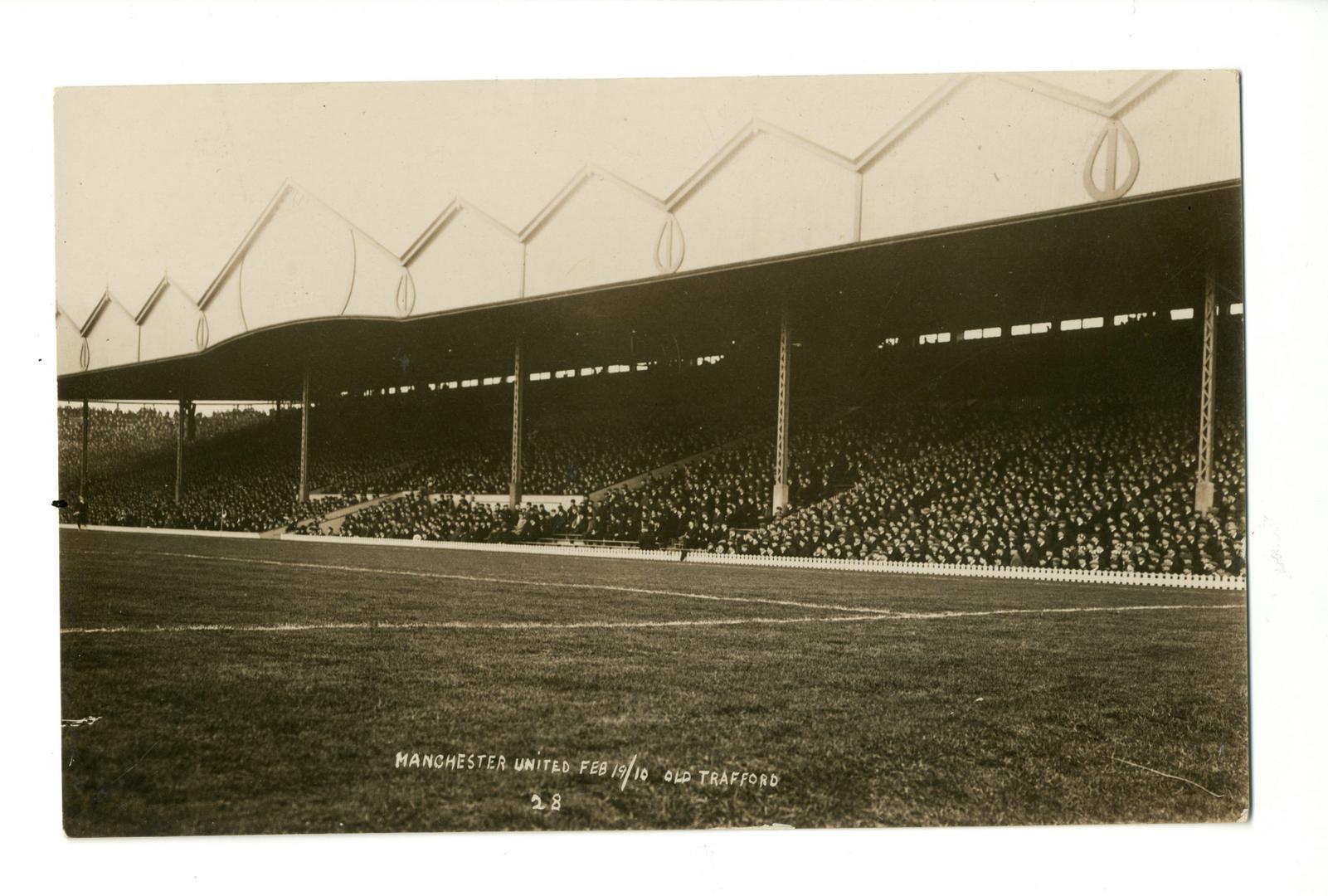
United have played at Old Trafford since 1910. The stadium contains memories that cannot be recreated by moving statues and naming stands after former players.
Supporters remember where they sat with parents, where they celebrated title victories and where they experienced their first European night.
The club has said that Old Trafford’s heritage will be protected and celebrated. The proposed new site’s proximity would allow traditional matchday routes and historic features to remain connected to the new ground.
The exact future of the existing structure has not yet been fully settled publicly.
Parts of the site could potentially become heritage spaces, public areas or elements of the wider redevelopment. Some features may be preserved or relocated.
Whatever solution is chosen, heritage cannot be reduced to a museum corner and a collection of plaques.
The Munich Clock, the United Trinity statue and the names associated with the club’s history must be treated with care.
The new stadium also needs to feel recognisably Mancunian.
That identity should appear in its materials, public spaces, supporter areas and relationship with the surrounding community—not only through a giant red devil symbol visible from a distance.
Affordability Will Be the Real Test

A 100,000-seat stadium should allow more supporters to attend matches.
That is one of the strongest arguments for the project.
Demand for United tickets remains enormous, and many official members are unable to attend regularly.
More capacity does not automatically mean more affordable access.
The club will face pressure to maximise income through hospitality, premium seating, commercial experiences and potentially personal seat licences.
A ground can contain more seats while still becoming less accessible to ordinary supporters.
United have repeatedly described affordability as a key design principle and have said younger fans must remain able to attend.
Supporters will judge the eventual ticketing model rather than those promises.
The club must decide how many seats remain general admission, how season tickets are protected and whether local supporters receive meaningful access.
Accessibility must also be built into the stadium from the beginning.
Wheelchair spaces, sensory facilities, accessible concourses, transport connections and seating for families and older supporters should not be treated as additions after the main commercial design is complete.
A stadium that calls itself the world’s best must work for more than its highest-paying visitors.
A Longer Timeline Than the First Headlines Suggested
When the concept was first announced in March 2025, United spoke about a possible five-year construction period.
That estimate referred to the building phase rather than the full process of planning, financing and preparing the site.
The latest public target is for the new stadium to open by 2035.
That timeline reflects the scale of what remains.
The masterplan needs approval. Public consultation must take place. Technical designs need to be completed, funding secured and surrounding infrastructure coordinated.
Delays would not automatically mean failure.
Projects of this size usually change as they pass through planning, engineering and financial scrutiny. The design may also evolve significantly from the first images released by Foster + Partners.
The honest assessment is that Manchester United have made real progress, especially by securing most of the required land.
But the club remains closer to the end of the planning phase than the beginning of construction.
Final Thoughts
The future of Old Trafford is no longer about repairing a roof or adding another tier.
Manchester United are attempting to build a new 100,000-seat home at the centre of one of Britain’s most ambitious sports-led regeneration programmes.
The project could increase matchday revenue, welcome more supporters, improve transport and help create thousands of homes and jobs.
It could also place additional financial pressure on the club, commercialise the matchday experience and weaken the connection between United and the supporters who built its atmosphere.
The new stadium will not be judged only by its size.
It will be judged by whether fans can afford to enter, whether they feel close to the pitch and whether the ground still feels like Manchester United when the lights come on.
The club has cleared several important obstacles. It has selected the new-build option, secured most of the land and established a wider regeneration structure.
The most difficult decisions remain ahead.
United must finance the stadium without sacrificing the football team, protect the surrounding community and carry Old Trafford’s history into a new building without turning that history into decoration.
A spectacular stadium can become a symbol of renewal.
It can also become an expensive monument to misplaced priorities.
The difference will be decided not by the early computer-generated images, but by the financial, architectural and supporter-focused choices Manchester United make over the next decade.
Discover more from Football Vows
Subscribe to get the latest posts sent to your email.