20 Best Premier League Midfielders of All Time: Ranked by Quality, Influence and Legacy
From creative passers and relentless ball-winners to goalscoring icons and title-winning leaders, these are the midfielders who shaped the Premier League era.

The Premier League has never had one fixed idea of what a great midfielder should be. Some of its finest players controlled matches with passing and positioning. Others dominated through power, tackling, goals, assists or leadership. A few were so complete that they could decide a game from almost anywhere on the pitch.
That variety makes an all-time ranking difficult. Comparing Roy Keane with Kevin De Bruyne is not a simple statistical exercise. Keane set standards, protected his team and drove Manchester United through intense title races. De Bruyne became one of the most productive creators the competition has seen. Both were extraordinary, but they influenced matches in different ways.
This ranking considers Premier League performance only. European trophies, international careers and achievements in other leagues add useful context, but they do not decide the order. The main factors are peak quality, consistency, longevity, individual production, tactical influence, leadership, major-match impact and contribution to winning teams.
Wide midfielders and attacking midfielders are included because they were officially and tactically part of midfield units for much of their Premier League careers. Players who operated mainly as centre-forwards are excluded, even when they dropped into deeper areas.
No ranking can end the debate. Supporters will value different qualities, and every era presented different tactical demands. However, the 20 players below have strong claims based on what they delivered, how they changed their teams and the memories they left behind.
How the Ranking Was Decided
Peak level: How dominant was the player at his very best, and could he decide the biggest matches?
Longevity: Did he maintain a high standard across several seasons rather than one brilliant campaign?
Production: Goals and assists matter, but so do control, defensive work and progression from deeper areas.
Winning influence: Trophies help, although players are not punished simply for representing weaker teams.
Tactical legacy: Some midfielders changed how a role was understood or became the reference point for a generation.
The 20 Best Premier League Midfielders of All Time
20. Gilberto Silva
Arsenal

Gilberto Silva rarely attracted the attention given to Arsenal’s most expressive stars, yet his intelligence was central to the balance of Arsène Wenger’s best team. He protected the defence, covered for advancing teammates and kept possession moving without adding unnecessary risk.
The Brazilian arrived in 2002 and immediately helped Arsenal win the title. Two years later, he was a key member of the Invincibles. Patrick Vieira supplied power and authority, while Gilberto often provided the security that allowed the rest of the midfield to attack.
His influence is best understood through structure rather than highlights. Gilberto read danger early, filled spaces and made difficult work appear simple. Modern analysts would describe many of his actions as rest defence, transition control and positional discipline. At the time, supporters often called it doing the quiet work.
He ranks 20th because several players above him reached higher individual peaks. Still, few defensive midfielders have fitted a great Premier League side more naturally.
19. Mesut Özil

Mesut Özil’s Premier League career did not produce a league title, and his final years at Arsenal became complicated. At his best, however, he was a creator of rare vision and delicacy.
The 2015/16 season captured his brilliance. Özil supplied 19 assists, then the second-highest total in a Premier League campaign, and created 146 chances. His passes often arrived before defenders recognised the danger. Rather than forcing the ball, he waited for the exact moment when a run became available.
Critics questioned his intensity in difficult away matches, but his creative peak deserves recognition. Arsenal frequently depended on him to turn possession into clear chances, particularly when opponents defended deep.
Özil ranks below the title-winning legends because his best level was not sustained for long enough. Yet very few Premier League midfielders have seen the final pass as quickly or executed it with such calm precision.
18. Riyad Mahrez
Leicester City and Manchester City

Riyad Mahrez belongs in this discussion because he succeeded in two completely different Premier League environments. At Leicester City, he was the creative star of the greatest underdog title win in the competition’s history. At Manchester City, he became an elegant and reliable part of a dominant squad.
His first touch gave him time that did not seem to exist for other players. Starting from the right, Mahrez could pause, shift the ball onto his left foot and either bend a shot towards the far corner or deliver a precise final pass.
He finished his Premier League career with 82 goals and 61 assists in 284 appearances, winning five titles. Those numbers are impressive, but his ability to decide tight matches was equally important.
Mahrez is placed 18th because he was not always an automatic starter during City’s strongest years. Even so, his quality, trophy record and historic role in Leicester’s miracle make him one of the league’s finest wide midfielders.
17. Robert Pirès
Arsenal and Aston Villa

Robert Pirès brought elegance, goals and intelligence to Arsenal’s left side. He did not play like a traditional winger who remained close to the touchline. Instead, he drifted into central areas, combined with Thierry Henry and arrived in scoring positions with excellent timing.
During Arsenal’s 2001/02 double-winning season, Pirès led the Premier League assist chart despite suffering a serious knee injury before the campaign ended. He later became an essential member of the Invincibles, giving Wenger’s team a smooth connection between midfield and attack.
Pirès scored 62 league goals during his Arsenal years and produced more than 40 assists. His partnership with Henry and Ashley Cole made Arsenal’s left side one of the most dangerous combinations of the era.
A shorter peak keeps him outside the top 15. Still, at his best, Pirès was one of the most stylish and productive attacking midfielders English football has seen.
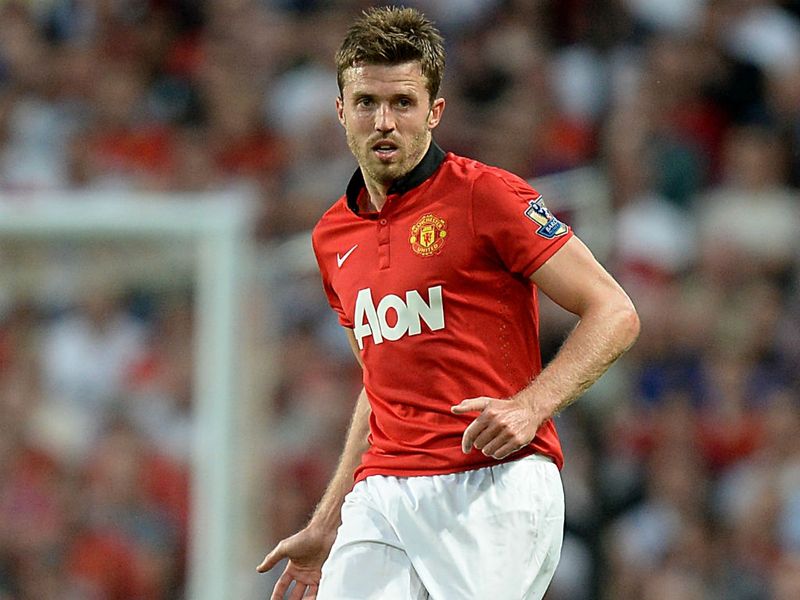
16. Michael Carrick
West Ham United, Tottenham Hotspur and Manchester United

Michael Carrick was rarely the loudest or quickest midfielder on the pitch. His greatness came from calmness, awareness and an ability to make the next phase of play easier for everyone around him.
After joining Manchester United in 2006, Carrick became the positional base of a team that won five Premier League titles in seven seasons. He received the ball from defenders, passed through pressure and protected central spaces through anticipation rather than constant tackling.
Carrick made 481 Premier League appearances and provided the control that allowed more attacking teammates to take risks. In the 2012/13 title season, his passing and authority were especially important as United reclaimed the championship in Sir Alex Ferguson’s final campaign.
He is sometimes underrated because his contribution was not easily measured through goals or assists. Yet teammates and rival managers consistently praised his influence. Carrick ranks 16th as one of the best tempo-setters and holding midfielders of the era.
15. Claude Makélélé
Chelsea

Claude Makélélé spent only five Premier League seasons at Chelsea, but his tactical influence was enormous. The defensive midfield position became widely known as the ‘Makélélé role’ because he performed it with such discipline and intelligence.
José Mourinho placed him at the base of a midfield triangle, where he screened the centre-backs, collected loose balls and played simple passes to more creative teammates. Chelsea won back-to-back titles in 2004/05 and 2005/06, conceding a record-low 15 league goals in the first of those campaigns.
Makélélé was not merely a destroyer. He understood angles, controlled space and helped Chelsea build attacks safely. His presence allowed Frank Lampard to make aggressive forward runs and gave the full-backs greater freedom.
Longevity prevents him from ranking higher. In terms of changing how English football understood the defensive midfielder, though, Makélélé has one of the strongest legacies on this list.
14. Eden Hazard
Chelsea

Eden Hazard was officially listed as a midfielder during much of his Chelsea career, although his freedom and attacking output often made him look like a forward. From 2012 to 2019, he was one of the league’s most feared one-against-one players.
Hazard scored 85 goals and supplied 54 assists in 245 appearances. He won two Premier League titles and was named Player of the Season in 2014/15. During that campaign, Chelsea could give him the ball under pressure and trust him to carry the team up the pitch.
His balance, acceleration and close control made him extremely difficult to tackle. Defenders knew he wanted to move inside from the left, yet stopping him remained a major problem. Hazard also became more productive as his career progressed, recording 16 goals and 15 assists in his final league season.
A seven-season spell and a slightly inconsistent middle period keep him below the top group. At peak level, however, Hazard was capable of winning matches almost alone.
13. David Beckham

David Beckham combined elite technique with a work rate that was sometimes overlooked because of his global fame. He was not a dribbling winger in the modern sense. His main weapons were crossing, long passing, set pieces and relentless movement on the right side.
Beckham registered 80 assists in only 265 Premier League appearances and won six titles. From his league debut to his departure in 2003, no player created more goals for teammates. His delivery gave Manchester United a constant route into the penalty area, even against organised defences.
The 1998/99 Treble season showed his resilience. After intense criticism following the World Cup, Beckham produced one of his finest campaigns and played a decisive role in United’s late-season success.
He also scored 18 Premier League free-kicks, a competition record. Beckham ranks 13th because the players above him offered greater central control or longer careers. As a right-sided midfielder and specialist passer, he remains almost unmatched.
12. Rodri
Manchester City

Rodri became the control centre of Manchester City’s most successful period. He combined the positional discipline of a holding midfielder with the passing quality and physical strength required to dominate modern Premier League matches.
City won four consecutive league titles from 2020/21 to 2023/24, and Rodri’s importance grew with each season. He received under pressure, stopped counterattacks and kept Guardiola’s team camped inside the opponent’s half. His ability to protect possession allowed City to attack with large numbers.
The Spaniard also developed a reputation for decisive goals. His late runs and powerful shooting gave City another route when opponents blocked the usual passing lanes.
Rodri is ranked 12th because his Premier League career is shorter than those of the highest names and was interrupted by a major injury. His peak, however, belongs in the elite category. With more sustained seasons, he could rise much higher in future versions of this list.
11. N’Golo Kanté
Leicester City and Chelsea

N’Golo Kanté changed the competitive level of two clubs in consecutive seasons. He helped Leicester City complete an astonishing title win in 2015/16, then moved to Chelsea and immediately became the Premier League Player of the Season as Antonio Conte’s team won the championship.
Kanté was often described as if he simply ran everywhere. That description missed his intelligence. He recognised danger early, judged when to press and recovered the ball without constantly giving away fouls.
His contribution in possession was also underrated. Kanté could carry the ball away from pressure and connect defence to attack with quick, safe decisions. At his best, he gave teammates the confidence to move forward because they knew he could protect the space behind them.
Injuries reduced his influence during later Chelsea seasons, which keeps him just outside the top 10. His 2015 to 2018 peak was still one of the finest periods ever produced by a defensive or box-to-box midfielder.
10. Yaya Touré
Manchester City

Yaya Touré could control a match with technique, then transform it with a sudden surge of power. Few midfielders have carried the ball through the centre with such a rare mix of speed, strength and composure.
His 2013/14 season remains one of the greatest individual midfield campaigns in Premier League history. Touré scored 20 goals and added nine assists as Manchester City won the title. He became only the second central midfielder at the time to reach 20 league goals in one season.
Touré could play deeper, operate box to box or move closer to the striker. He scored free-kicks, penalties, long-range efforts and goals after running from his own half. That range made him almost impossible to match physically or tactically at his peak.
He won three titles and finished with 62 goals in 230 appearances. Greater consistency across his entire City spell would have pushed him higher. Based on pure peak dominance, he could compete with almost anyone in the top 10.
9. Cesc Fàbregas
Arsenal and Chelsea

Cesc Fàbregas became the creative centre of Arsenal while still a teenager, then returned to England years later and immediately directed Chelsea to the title. Very few midfielders have shaped two leading clubs in such different stages of their careers.
At Arsenal, Fàbregas played with energy, imagination and ambition. He could receive from the defence, break lines and arrive near the penalty area. At Chelsea, he became more controlled and specialised in releasing runners from deeper positions.
His 111 assists place him among the most productive creators in Premier League history. Fàbregas is also the only player to provide at least 15 assists in a season for two different clubs, reaching 17 for Arsenal and 18 for Chelsea.
He won two Premier League titles after returning with Chelsea. The lack of a league medal during his brilliant Arsenal peak slightly affects his position, but his passing range, vision and adaptation earn him ninth place.
8. David Silva
Manchester City

David Silva was the technical foundation of Manchester City’s rise from ambitious challengers to serial champions. He operated between midfield and attack, receiving the ball in narrow spaces and finding passing angles that many opponents could not see.
Silva made 309 Premier League appearances, scored 60 goals, supplied 93 assists and won four titles. Those figures reflect his productivity, but they do not fully explain his influence. He improved the rhythm of almost every attack and made teammates more effective.
His size never prevented him from competing in a physical league. Quick thinking, close control and excellent balance allowed him to escape pressure. Under Roberto Mancini, Manuel Pellegrini and Pep Guardiola, Silva adapted without losing his identity.
He was not as explosive as De Bruyne or as physically dominant as Touré. Instead, Silva built his greatness through constant intelligence. He ranks eighth as one of the finest players ever to operate in the spaces between the lines.
7. Ryan Giggs
Manchester United

Ryan Giggs owns records that may never be matched. He won 13 Premier League titles, made 632 appearances and provided 162 assists, the highest total in the competition’s history.
His early years were built around speed and fearless dribbling from the left wing. As he aged, Giggs changed his game. He became a more selective runner, a central creator and, at times, a deeper midfielder who used experience rather than acceleration.
Longevity is a major part of his case, but it should not hide his peak quality. Giggs could break defensive lines, create goals and produce decisive moments in title races. He scored in 21 different Premier League seasons and remained useful into his late thirties.
Why is he not higher? The top six had greater control over the entire identity of their teams or reached more dominant central-midfield peaks. Even at seventh, Giggs stands as the most decorated and durable midfielder in Premier League history.
6. Roy Keane
Nottingham Forest and Manchester United
Roy Keane was the competitive heartbeat of Manchester United’s first great Premier League dynasty. His leadership is often discussed before his football, but that can understate how complete he was during his peak years.
Keane could tackle, carry the ball, pass forward and arrive in the penalty area. He played with fierce intensity, yet his game was not reckless. At his best, he made fast decisions and kept United moving through difficult matches.
He won seven league titles and captained United to four of them. More importantly, he established a performance standard that teammates were expected to meet. When United faced strong opponents, Keane rarely hid from responsibility.
Injuries later reduced some of his box-to-box power, so he adapted into a more disciplined central role. His influence on winning culture gives him an advantage over several more statistically productive players. Keane ranks sixth as one of the league’s greatest leaders and most forceful central midfielders.
5. Patrick Vieira
Arsenal and Manchester City

Patrick Vieira redefined the physical and technical possibilities of a Premier League central midfielder. He was tall, powerful and aggressive, but also smooth in possession and capable of carrying the ball through several lines.
Vieira won three titles with Arsenal and captained the Invincibles. He became the central figure in the rivalry with Manchester United, where his battles with Roy Keane represented two clubs and two competing ideas of leadership.
The Frenchman scored 31 goals and supplied 34 assists in 307 appearances. More important than the totals was his ability to dominate territory. He could win possession near his own box and drive Arsenal into attack within seconds.
Vieira also appeared in the PFA Team of the Year for six consecutive seasons, showing the consistency of his peak. He ranks fifth because he combined leadership, technique, athletic power and title-winning influence in a way few midfielders have matched.
4. Steven Gerrard
Liverpool

Steven Gerrard carried a level of responsibility that few Premier League midfielders have experienced. For much of his Liverpool career, he was the team’s leading creator, emotional leader, long-range threat and emergency solution.
Gerrard recorded 120 goals and 92 assists in 504 league appearances. He could play as a holding midfielder, a box-to-box runner, a right-sided midfielder or a number ten. Managers changed, teammates changed and Liverpool’s level changed, yet Gerrard remained central.
The absence of a Premier League title is the largest gap in his record. It should affect the ranking, but it does not erase the scale of his individual influence. He drove Liverpool through several title challenges and repeatedly produced in major matches.
At his best, Gerrard combined power, passing range, tackling and shooting in one player. He ranks fourth because the three names above him either achieved more sustained league dominance or set records that are extremely difficult to challenge.
3. Frank Lampard
West Ham United, Chelsea and Manchester City

Frank Lampard is the greatest goalscoring midfielder in Premier League history. His total of 177 goals is remarkable not only because of the number, but because it was built through repeatable movement, timing and consistency rather than occasional spectacular seasons.
Lampard scored at least 10 league goals in 10 consecutive campaigns. He also supplied 102 assists, making him one of the few players to exceed 100 in both categories. Those numbers show that he was not simply arriving to finish chances. He also created them.
At Chelsea, Lampard won three titles and became the attacking engine of José Mourinho’s dominant midfield. Makélélé provided security, while Lampard attacked space with exceptional discipline. He was named Premier League Player of the Season in 2004/05.
Durability strengthens his case. Lampard played 609 league matches and rarely missed important periods during his peak. He ranks third because no midfielder has matched his combination of goals, assists, reliability and title-winning contribution.
2. Paul Scholes
Manchester United

Paul Scholes offered almost every quality a central midfielder could need. In his younger years, he scored regularly and arrived around the penalty area. Later, he moved deeper and controlled matches with awareness, touch and passing range.
Scholes won 11 Premier League titles, the second-highest total by any player. He scored 107 goals and provided 55 assists across 499 appearances. The statistics are impressive, but his influence often appeared several passes before the final action.
He could switch play with either foot, escape pressure in tight spaces and set the rhythm of a match. Opponents respected him because he rarely needed extra touches. Teammates trusted him because he was almost always available for the ball.
Scholes also adapted across different generations of United teams. He played alongside Keane, Carrick, Beckham, Giggs and many other styles without becoming less important. He ranks second because of his technical completeness, longevity and extraordinary title record.
1. Kevin De Bruyne
Chelsea and Manchester City

Kevin De Bruyne takes first place because he combined elite creation, goals, athletic power and title-winning influence at a level no other Premier League midfielder has matched in the modern era.
The Belgian finished his Premier League career with 288 appearances, 72 goals and 119 assists. He won six titles with Manchester City and produced the best minutes-per-assist rate among players with at least 50 appearances. His 20 assists in 2019/20 matched the league record at the time.
De Bruyne could create from almost any zone. He crossed early from the right, passed through defensive lines, attacked the box and scored from distance. Unlike many creative specialists, he also had the power to carry the ball through midfield at speed.
In Guardiola’s most successful teams, De Bruyne was the player who turned control into damage. City could dominate possession without him, but he gave that possession urgency and direction. He delivered in title races, against deep defences and in high-pressure matches.
Scholes, Lampard and Gerrard all have convincing claims. De Bruyne edges them because his peak combined the best parts of a playmaker, box-to-box midfielder and attacking force. For this ranking, he is the greatest Premier League midfielder of all time.
Honourable Mentions and Active Challengers
Bruno Fernandes: His record 21-assist Premier League season in 2025/26 and sustained creativity place him on a path towards the list, although he needs more title-winning longevity.

Fernandinho: A vital defensive and tactical leader for Manchester City whose value was often clearer when he was absent.
Xabi Alonso: A beautiful passer and intelligent controller, but his Premier League spell was shorter than those of the selected players.
Santi Cazorla: Two-footed, press-resistant and technically outstanding. Injuries and a lack of league titles reduce his all-time position.
Luka Modrić: Excellent at Tottenham, though the defining years of his career came after leaving the Premier League.
Paul Ince: A powerful leader and major figure in the early Premier League years for Manchester United, Liverpool and Middlesbrough.
David Batty: A title winner with Blackburn and one of the era’s most disciplined, competitive central midfielders.
Declan Rice: Already one of the league’s leading modern midfielders, with time to build the longevity and trophy record needed for an all-time place.
Final Verdict
The Premier League’s greatest midfielders cannot be reduced to one type. De Bruyne created chances at a historic rate. Scholes controlled time and space. Lampard turned late runs into a record number of goals. Gerrard carried responsibility across several roles. Vieira and Keane defined the league’s most intense midfield rivalry.
Different tactical eras also shaped the opportunities available to each player. Early Premier League midfielders often worked inside a 4-4-2, where physical duels and large spaces were common. Later generations operated in three-player units, possession systems and highly organised pressing structures.
Statistics have improved, but they still cannot fully measure leadership, positioning or the ability to calm a team under pressure. That is why Makélélé and Carrick remain important even when their goal totals look modest beside Lampard or De Bruyne.
The final order will always create disagreement. Arsenal supporters may place Vieira higher. Liverpool fans can argue that Gerrard achieved more with less support. Manchester United followers may choose Scholes or Keane, while Chelsea supporters have a powerful case for Lampard. City fans can point to De Bruyne’s production and six titles.
That debate is part of the attraction. Each player represented a different solution to the midfield problem. Together, they explain how the Premier League evolved from direct, physically intense football into the tactically varied global competition it is today.
Sources
Premier League Hall of Fame: Paul Scholes
Premier League Hall of Fame: Frank Lampard
Premier League Hall of Fame: Steven Gerrard
Premier League Hall of Fame: Patrick Vieira
Premier League: Roy Keane career in numbers
Premier League: Kevin De Bruyne’s Manchester City legacy
Premier League: David Silva Hall of Fame profile
Premier League: Cesc Fabregas Hall of Fame profile
Premier League: Michael Carrick Hall of Fame profile
Premier League: Eden Hazard Hall of Fame profile
Premier League: Claude Makelele’s tactical influence
Premier League: Yaya Toure career profile
Premier League: Riyad Mahrez career statistics
Premier League: Ryan Giggs career statistics
Discover more from Football Vows
Subscribe to get the latest posts sent to your email.


[…] 20 Best Premier League Midfielders of All Time: Ranked by Quality, Influence and Legacy […]
[…] 20 Best Premier League Midfielders of All Time: Ranked by Quality, Influence and Legacy […]